Home
Last updated: 10/01/2026

Neo Sindarin - Prepositions

Top

1. Overview

Prepositions are parts of speech that show relationships between words in a sentence.

They often indicate where, when, why, or how something happens.

In Sindarin, when a preposition is used adverbially and follows immediately after a verb or the zero copula, it undergoes soft mutation.

All prepositions that end in a vowel cause soft mutation.

Most that end in a consonant also cause soft mutation, but some prepositions that ended in a consonant back in Common Eldarin cause different mutations.

Prepositions are generally proclitic, so e.g. mîn and trî and mîg can be shortened.

Some experts also think that prepositions are prosodically conditioned in Sindarin. That means that the mutation depends on sound-structure (prosody), not on syntax alone; so if the preposition is prosodically independent (pause, emphasis, rhythmic break), mutation may not occur, even if syntax would allow it.

Definite prepositional forms

Prepositions typically deal with indefinite objects. For example, "mi ham" translates to "in a room". To mark the room as a particular room, the preposition (mi) requires an article.

In both the singular and the plural, the article may appear as a suffix appended to prepositions. This suffix normally has the form -n or -in, but it might look a bit different depending on phonetic rules.

Top

2. Prepositions of space

Prepositions of location
mi = "in" indefinite ......: mi + soft mutation definite singular: min + mixed mutation definite plural .: min + nasal mutation
mi: Elrond vi ham = "Elrond [is] in [a] room" Imladris vin dum = "Rivendell [is] in the valley" loss min phairth = "snow in the fields"
po = "on" indefinite ......: po + soft mutation definite singular: poe + soft mutation definite plural .: poen + nasal mutation
po: Faramir bo lunt = "Faramir [is] on [a] boat" Boromir boe lunt = "Boromir [is] on the boat" loss da boen phairth = "snow ‹there is› on the fields" loss da boe lynt = "snow ‹there is› on the boats" nasal mutation should undergo nasal loss and assimilation, so poen → poe
nu = "under" indefinite ......: nu + soft mutation definite singular: nui + soft mutation definite plural .: nuin + nasal mutation
nu: e·gorf nu chadhu = "the ring [is] under [a] chair" e·gorf nui chadhu = "the ring [is] under the chair" e·gyrf nui chedhy = "the rings [are] under the chairs" nuin → nuigyrf nuin archadhu = "the rings [are] under the throne" nî nui daus = "‹s/he was› under the thatch" nî nuin thyss = "‹s/he was› under the bushes"
ho = 'before, in front (spacial)' ᴺS indefinite ......: ho + soft mutation definite singular: hoe + soft mutation definite plural .: hoen + nasal mutation
ho: Aragorn cho chenneth = "Aragorn [is] before [a] window" Aragorn choe chenneth = "Aragorn [is] ‹before the› window" Aragorn choen chennith = "Aragorn [is] ‹before the› windows"
sa = "beside, alongside, next to" indefinite ......: sa + soft mutation definite singular: s'e(n) + soft mutation definite plural .: s'i(n) + nasal mutation
sa: Arwen chadhwa ha 'aladh = "Arwen sits next to [a] tree" Arwen chadhwa ha vablanthos = "Arwen sits next to [a] sycamore" Arwen chadhwa h'alaf = "Arwen sits next to [an] elm" Arwen chadhwa h'e dulus = "Arwen sits next to the poplar" Arwen chadhwa h'i thylys = "Arwen sits next to the poplars" Arwen chadhwa h'Aragorn = "Arwen sits next to Aragorn" en·edhel s'en alaf = "the elf next to the elm"
im = "between" indefinite ......: im + soft mutation definite ........: im + article
im: sardh im chedhy dâd = "[a] table between two chairs" (lit.) "table between chairs two"hardh im in·edain dâd = "the table is between the two men" (lit.) "the table between the men two"
mîg = "among" ᴺS indefinite ......: mîg + soft mutation definite ........: mîg + article
mîg: maf vorn mig vaif nim = "[a] black sheep among white sheep" e·vaf vorn vigvaif nim = "[a] black sheep [is] among the white sheep"
nef = "hither, on this side" indefinite ......: nef + soft mutation definite ........: nef + article
nef: en·edhel odul nef aear = "the elf came ‹on this side› [of] ‹the sea›" en·edhel odul nef en·alaf = "the elf came ‹on this side› [of] the elm"
athar = "beyond" (athar has been misread as "athan") indefinite ......: athar + soft mutation definite ........: athar + article
athar: ti dhorthar athar barth = "they live beyond [a] field" ti dhorthar athar in·eryd = "they live beyond the mountains"
adel = "behind" N. indefinite ......: adel + soft mutation definite ........: adel + article
adel: Aragorn badrant adel'wadoras = "Aragorn walked behind the fellowship"
dad = "down" N. indefinite ......: dad + soft mutation definite ........: dad + article
dad: e·naug evin dhad en·orod = "the dwarf went down the mountain"
Prepositions of Direction / Goal (movement toward)
an = "to, for" indefinite ......: an + mixed mutation definite singular: (e)ni + soft mutation definite plural .: (e)nin + nasal mutation preserved before other nasals (original and mutations): an·n, an·ñ, am·m preceding r, the nasal n becomes dh (adh·r) preceding l, the nasal n in an survives and becomes l (al·l)
an: nen an buidad = "water for cleaning" nen eni cheryn = "water for the lady" naw enin pharf = "idea for the book" nen an·nathal = "water for [a] guest" linnas añ·gannel = "music for [a] harp" peny am·merith = "plans for feasts" math adh·roch = "food for [a] horse" hemmaid al·laer = "clothes for [the] summer"
na = "to, towards; at; with, by" indefinite ......: na (n') + soft mutation definite ........: n' + article
na: Aragorn badrol na chenneth = "Aragorn walks towards [a] window" Aragorn badrol n'annon = "Aragorn walks towards [a] gate" Aragorn badrol n'en·annon = "Aragorn walks towards the gate"
thar = "across, athwart, over" (also prefix) indefinite ......: thar + soft mutation definite ........: thar + article
thar: Faramir badrol thar ham = "Faramir walks across the room" Faramir badrol tharham = "Faramir walks across the room"
or = "over" (N.) indefinite ......: or + liquid mutation definite ........: erin + nasal mutation
or: iant or dhuin = "[a] bridge over [a] river" iant ordhuin = "[a] bridge over the river" erin dolothen Ethuil = "‹on the› eighth of Spring"
trî = "through" (N.) indefinite ......: tri + soft mutation definite ........: tri + article
tri: e·naug evin dri e·fela = "the dwarf went through the mine"

Prepositions of Source / Origin (movement away from)

o (od i) = "(away) from" (< ✶aut) "o galadhremmin", "o menel" indefinite ......: o + stop mutation definite singular: od + article
o: padras o thaur = "he walked from [a] forest" retho odbend = "stay away from the slope" retho odñglemyg = "stay away from the orcs"
ed = "out, out of" indefinite ......: ed + stop mutation definite ........: ed + article Before s, f, th becomes "e s", "e f", "e th".
ed: Faramir amrant ed gas = "Faramir climbed out of [a] hole" Faramir amrant ed'as = "Faramir climbed out of the hole" Faramir odul e sûl = "Faramir came out of [the] wind" Faramir odul e falas = "Faramir came out of [a] beach" Faramir odul e thaur = "Faramir came out of [a] forest" Faramir odul ed mbaul = "Faramir came out of [a] torment" Faramir odul ed chwest = "Faramir came out of [a] breeze"
Prepositions of Path / Boundary / Route
pela(h) = "along, (lit.) by the boundary of" ᴺS indefinite ......: pela + sibilant mutation definite ........: pelah + article
pela(h): padrar bela thaur = "[they] walk along [a] forest" padrar belahdaur = "[they] walk along the forest"

3. Prepositions of time

fo = "before" (temporal) ᴺS indefinite ......: fo + soft mutation definite singular: foe + soft mutation definite plural .: foen + nasal mutation
fo: Legolas ola vara fo vâd = "Legolas becomes eager before [a] meal" Legolas ola vara foe vâd = "Legolas becomes eager before the meal" Legolas ola vara foen vaid = "Legolas becomes eager before the meals"
ab = "after" indefinite ......: ab + soft mutation definite ........: ab + article
ab: Legolas ola 'elir ab vâd = "Legolas becomes merry after [a] meal" Legolas olant 'elir abvâd = "Legolas became merry after the meal"
Top

4. Prepositions of association, means, and possession

gu = "with, together with" ᴺS indefinite ......: gu + soft mutation definite singular: gui + soft mutation definite plural .: guin + nasal mutation
gu: bas gu gûr = "bread with cheese" Boromir 'u roch = "Boromir [is] with [a] horse" Boromir 'ui chanar dín = "Boromir [is] with his brother" Boromir 'ui ñgwoen dín = "Boromir [is] with his geese" Boromir 'uin mellyn dín = "Boromir [is] with his friends"
na(n) = (partitive) "of; with, accompanied/provided by, associated/marked with" indefinite ......: na(n) + nasal mutation definite ........: nan + article
na(n): aran na chîr lim = "king of swift ships" aran nan aew lim = "king of swift birds" aran nan in·edhil = "king of the elves"
mo = "by (agent of), with" ᴺS indefinite ......: mo + soft mutation definite singular: moe + soft mutation definite plural .: moen + nasal mutation
mo: carnen vo Gimli = "made by Gimli" carnen voe vaeron = "made by the artist" carnen voen firn = "made by the dead" carnen voen meren = "made by the bold" sinnen moen hael = "known by the wise" sinnen moen meren = "known by the bold" mo fang Mithrandir! = "by Gandalf's beard!" = (lit.) "by beard [of] Gandalf"
o (uin) = "from, of" (< ✶hō) "o Eregion", "o Imladris" indefinite ......: o + soft mutation definite singular: ui + soft mutation definite plural .: uin + nasal mutation
o: Elrond o Imladris = "Elrond of Rivendell" edhil ui daur = "elves from the forest" edain uin phind = "men from the ridges"
di = "under, beneath" (N)DI should only be used with abstract concepts indefinite ......: di + soft mutation definite singular: din + mixed mutation definite plural .: din + nasal mutation
di: e·ndîr di lym goe = "the man under shadows [of] fear" nî dhi lúthad = "‹s/he was› under [an] enchantment" te dhi 'west = "‹s/he› [is] under oath" te dhin chothron = "‹s/he› under the captain" ti dhin cherf in·erain = "they [are] under the lordship [of] the kings"

5. Prepositions of comparison

sui = "as" indefinite ......: sui + soft mutation definite ........: suin + nasal mutation
sui: Denethor vardha hui aran = "Denethor rules as [a] King" noeg medir huin erain = "dwarves eat as Kings" noeg medir huin chellyn = "dwarves eat as heroes"
be = "as, like, according to" indefinite ......: be + soft mutation definite singular: ben + mixed mutation definite plural .: ben + nasal mutation
be: Denethor vardha ve aran = "Denethor rules as [a] King" noeg medir ven erain = "dwarves eat as Kings" be bent = "according to [a] tale" be ndîr = "according to the man" ben chên = "according to the child" ben phint = "according to the tales"

6. Prepositions of exclusion and opposition

dan = "against" (N)DAN indefinite ......: dan + nasal mutation definite ........: dan + article
dan: naur nanñgaurhoth = "fire be against the wolf-horde"
eb = "except" ᴺS indefinite ......: eb + soft mutation definite ........: eb + article
eb: ilphen odúler eb vaethyr = "everyone came except warriors" ilphen odúler eb in·edhil = "everyone came except the elves"
pen = "without, lacking, -less" indefinite ......: pen + nasal mutation definite ........: ?
pen: Gimli liltha ben thoss = "Gimli dances without fear" Gimli liltha be nŷl = "Gimli dances without mistake"
os (oh) = "about" indefinite ......: os + sibilant mutation definite ........: oh + article
os: o lhoss = "about snow", or "concerning snow" (snow = "loss") oh Edhil = "about Elves", or "concerning Elves" os sîr = "about rivers", or "concerning rivers" oh i·silevril = "about the silmarils", or "concerning the silmarils"
Top

7. Similar prepositions

Some prepositions are very similar and may even have the same form, but mean different things. Here is a breakdown of the apparent collisions.

N(a), na(n) and dan

There are two prepositions that can cause ambiguity as both can be written as na. We distinguish them by how they behave when succeeded by an object starting on a vowel.

N(a)

n(a) is an allative preposition, indicating movement towards something. It is regularly elided to n' before vowels and it triggers soft mutation.

Avoid using n(a) for meanings of time, unless it's to indicate the end of a waiting period, as in na vedui, "at last".

This preposition should not be reduced before a "lost g."

Examples

  Thingol allu adhul na Dhor-Rodyn = "Thingol never returned to Valinor"
  athar dhoer lend n'Eriador       = "beyond leagues wide of Eriador"
  na 'aladh                        = "towards [a] tree"
Na(n)

na(n) is a prepositional genitive, used for partitive relationships. It becomes nan before vowels and triggers nasal mutation.

It indicates a sense of possession or having a certain feature.

Example

  Melian vaea, na nûr idh·Rodyn = "Melian was a Maia, of [the] race [of] the Valar"
  e·chên ereb nan Aragorn       = "the only child of Aragorn"
Dan

dan is a preposition that indicates opposition and is normally translated as "against".

The issue with dan is that it happens to be an nd- word, which means that it soft mutates into nan.

dan also trigger nasal mutation, the same as indefinite na(n).

If one subscribes to the idea that all prepositions heading a predicate should be lenited, that means that predicates starting in dan and indefinite na(n) before vowels may become indistinguishable.

Disambiguation happens by context: if the preposition happens to head a predicate or direct object, it's probably dan. If it doesn't, it's probably na(n):

  te ethir nan in·yrch = "he [is] [a] sentry of the orcs"
  onur nan in·yrch     = "‹he ran› against the orcs" (direct object)

The three o prepositions (about / away from / origin)
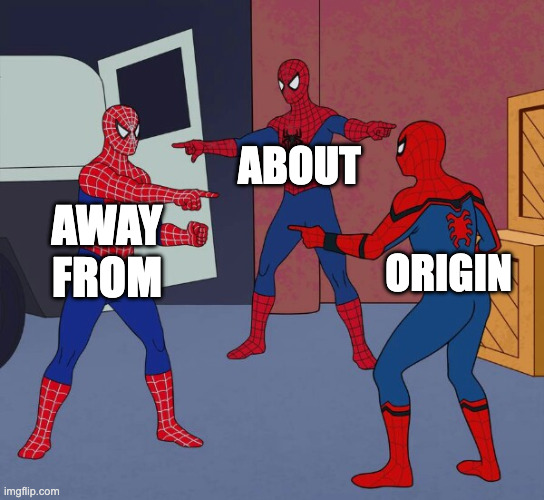
Three look-alike prepositions (meme)

There are three different prepositions that have partially coalesced into o:

  1. o meaning "about"
  2. o meaning "away from" as a movement - away from / due to / from someone or something as a point of departure - has an ablative function
  3. o meaning "from" as origin - from inside / out of / originating in - is used for the genitive of origin

This o/od/ui tripartite set is not interchangeable! They mean vastly different things and should be dealt with carefully.

"About"

The easiest one to discern from the others is the first, meaning "about".

Before vowels, this o becomes oh and before consonants, it uses the sibilant mutation. It doesn't change with a definite article.

Before a word starting with an s-, it becomes os. Examples:

   o lhoss       = "about snow", or "concerning snow" (snow = "loss")
   oh edhil      = "about elves", or "concerning elves"
   os sîr        = "about rivers", or "concerning rivers"
   oh i·silevril = "about the silmarils", or "concerning the silmarils"
"Away from"

The second o is an ablative function. Ablative is used to indicate motion away from something.

This preposition causes stop mutation. The definite version of it morphs into od.

This preposition can be compared to Russian от (ot). It typically means movement or relation away from a point. It implies distance or separation, often from a person, object, or source of influence. Examples:

  meno o nin!     = "go [away] from me!"
  ann o mellon    = "[a] gift from [a] friend" (source/person)
  naeg oddhram = "pain from the blow" (cause)
"From" (origin)

The last o is used for a genitive function of origin.

This preposition causes soft mutation. The definite version of it morphs into uin as it absorbs the article.

This preposition can be compared to Russian из (iz). It implies that the subject starts inside a place or situation and moves outward. Examples:

  Arwen o Imladris = "Arwen is from Rivendell" (originating from within the place)
  te anu ui vâr    = "he went from the house" ("he left the house") ("house" = bâr) *
  echannen o daw   = "made from wood" (the material out of which something is made) ("wood" = taw)
* anu is past tense 3rd person of gwae- "to go, depart"